Water efficiency
Drip irrigation delivers water at the root instead of across the surface, scheduled against soil-moisture readings rather than habit. Greenhouse cultivation cuts evaporation losses further, and rainwater capture from structure roofs is designed into the build.
Soil health
Parcels are tested before planting and re-tested each season. Rotation, cover crops between cycles and compost from farm residues keep organic matter in the ground, so fertiliser corrects a measured deficit rather than a guess.
Low-impact practice
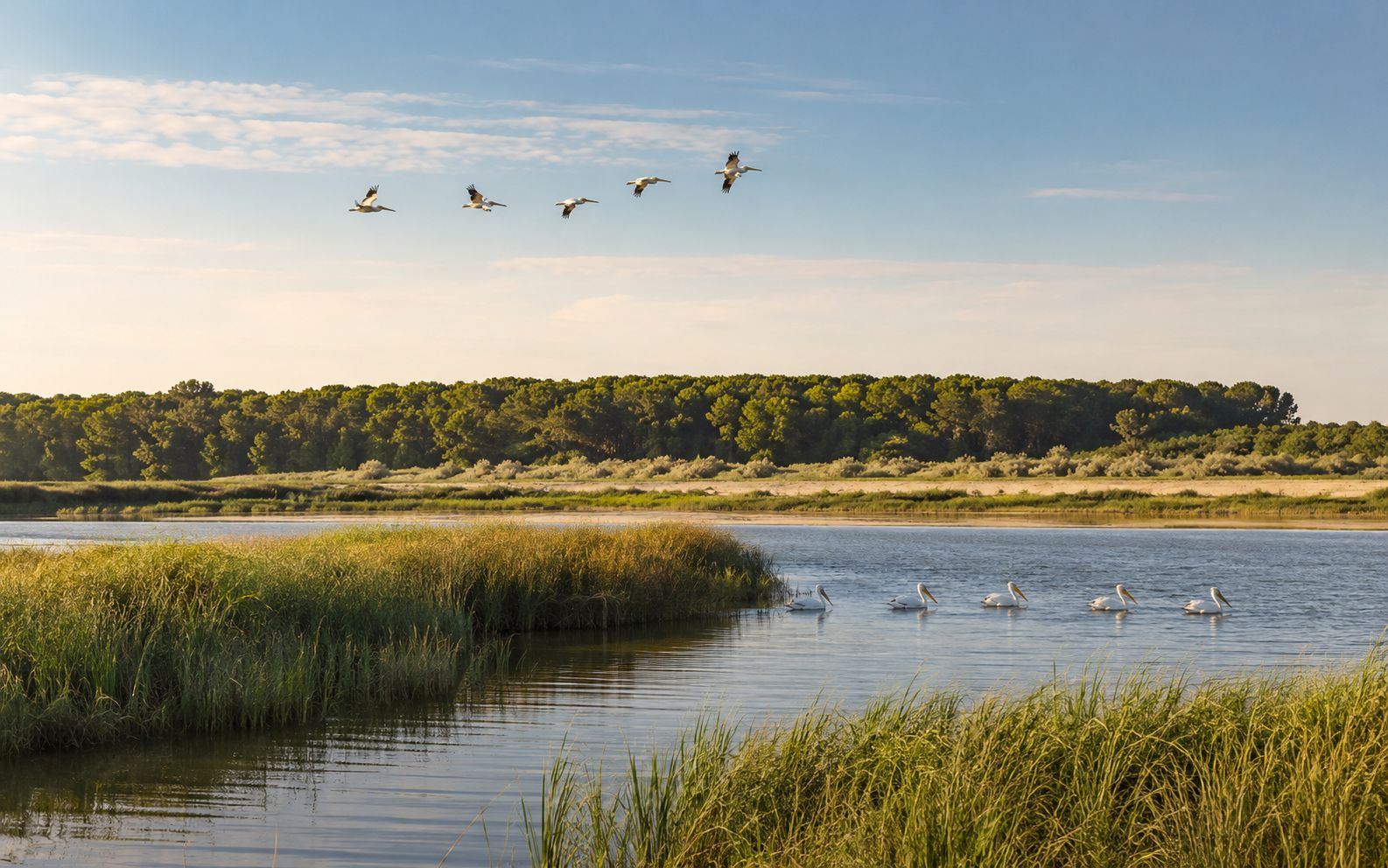
Integrated pest management first — monitoring, beneficial insects and physical barriers — with treatment as the last step, not the default. The farm borders a protected lagoon, so buffer strips and runoff control are part of the site plan.
Traceability
Every lot carries its parcel, planting date, inputs and harvest date through packing and onto the pallet. Buyers can trace a carton back to the row it came from — a requirement of our export contract, and the backbone of any certification we pursue.
From field to buyer, on record
Parcel ID, soil test, planting date.
Water, nutrients and treatments logged per cycle.
Date, crew and crate numbers.
Lot number, grade, carton count, temperature.
Delivery documents matched to the lot.
Farming next to a national park
Divjakë–Karavasta is a protected wetland and one of Albania's most important bird habitats. Runoff management, buffer planting and careful water abstraction are conditions of operating here, and they also happen to be good farming.